Sunday, 25 March 2012

Question 6: What have you learnt about technologies from the process of constructing this product?

Question 6: What have you learnt about technologies from the process of constructing this product?

In this question I will talk you through the areas where I have learnt about technologies the most, both in production and post production.
From the process, I have learnt of the importance that technology plays throughout both production and post-production. 
The most important thing I have learnt I think is how the finished product relies equally on the post-production process of editing and the production itself. Our film only seemed to come to shape when we were able to put it into a timeline on Adobe Premiere Pro.  By making an animatic of our sequence and then putting it into a timeline, it gave us a clear structure of what our film would be like, and allowed us to assess the duration of our shots and when and where titles would come into place.  Here is a commentary over our animatic that both I and Francis did through the process.

Test shots and real shots
Lighting- We didn’t fully appreciate the effectiveness of lightning until we compared the footage from our test shoot to the real shoot. Our test shoot resulted in poor quality grainy shots as we were not able to use the lighting equipment.  However for our real shoot we did use the lighting equipment, which resulted in clear images and much less grain in the shots.  Also, with the help of the three point lighting technique, we were able to create a greater sense of depth in our shots and higher contrast, which proved effective when trying to create the shadow of our assassin through the glass and the shadow of the head on the door. 


Before we were able to use the lights on our shoot we had to undergo a session with our media technician Chris on how to use the lighting safely and effectively.  This included wearing gloves when handling the lights as they get hot when left on for a period of time, and also taping down the wires of the lights to ensure nobody tripped over them causing harm to themselves or the lights.
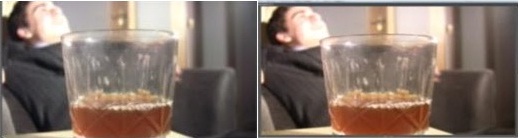
With and without colour grading
Contrast difference- Darker/lighter

Grading- I didn’t realise how effective grading was until the process was finished.  Using the colour wheel in Adobe Premier Pro, we made our shots slightly bluer, which made them look rather could, effectively representing our bad guy and also the cold blooded killing that takes place. 
With the benefit of hindsight I would have left more time for the grading process.  This is because we were only able to make the changes to the colour correction that were necessary rather than experimenting with a variety of settings. 

I would also have liked to pull off an even more prominent focus pull in the shot where the man is at the sink and the bag of drugs is in the foreground, although we did manage to improve it using a light filter which enhanced the pull.

Question 7: Looking back at your preliminary task what do you feel you have learnt in the progression from it to the whole product?

The learning from the preliminary task helped me a lot during my main task.  Although the scales of the tasks were different, I was able to use knowledge I had learnt from the preliminary task effectively during the final product process.
I have learnt that necessary planning and preparation is essential when trying to make a successful sequence.  We meticulously planned our sequence, firstly by creating our animatic.


 I learnt that an animatic is the very first presentation of your film, which helps you adjust shot duration, overall timing and really just what the sequence will be like.  An animatic is definitely something I would recommend to somebody who is creating an opening sequence, or media product of any kind.
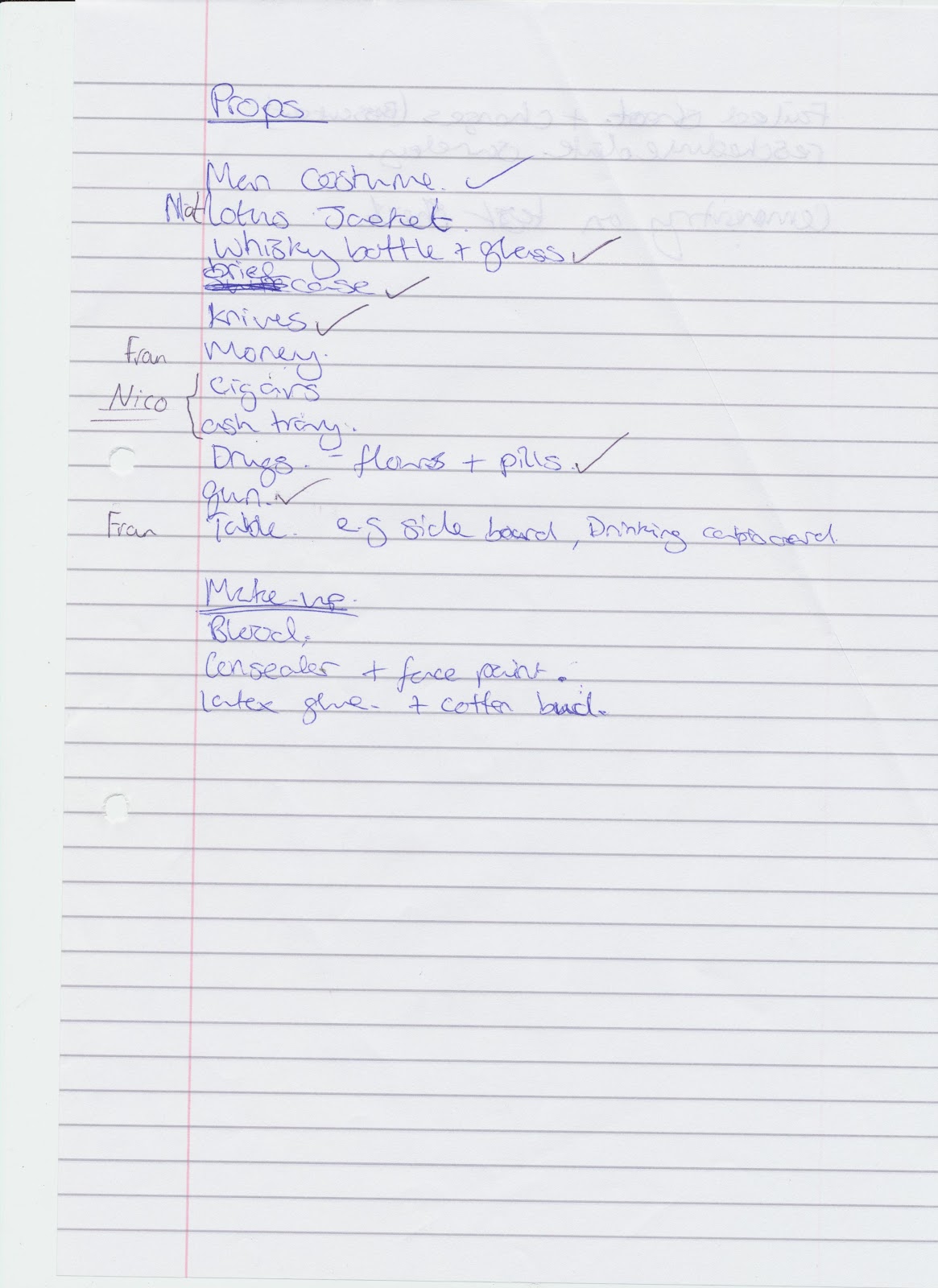
In our prelim, we made only a basic shot list, so when we filmed our sequence we were confused as to what shot we were doing and which ones we had already done.  For our real product we made several lists for our production:
Shot Log

Props List
Script


Shot List
Location
One thing we did take from our prelim was the use of only one location.  This proved really manageable as it saved us a lot of production time, which allowed us to focus on the camera work itself, rather than having to travel to different locations.  It also made the narrative much simpler; the audience could grasp a good understanding of the location from our master shots in the sequence.


Editing
Our preliminary edit was rather easy as the sequence was in real time.  We thought it would benefit us to have an easy linear edit so it didnt get too confusing and saved us time for the rest of the project.  However what we didnt take into account were titles, special fx, grading and music tracks, all of which were in our final product but not our prelim.  Therefore I have learnt, that the more complex you make your sequence, the more difficult it will be when in post-production.
Overall I think the most valuable thing we learnt from the prelim process was the importance of teamwork.  Once jobs were equally delegated between us in our prelim, things really did get easier, and allowed us to be a little more creative as a group within the short time period we had.  This was the same for the real product.  We kept in contact greatly throughtout the project so everybody knoew what was going on with the sequence and when things were going to happen.  We arranged daily meetings throughout the project both for organisation and planning, but also for creative sessions where we would all share our ideas on the sequence.


Saturday, 10 March 2012

Update!

We have now finished our final edit to our sequence!  We eventually resolved the problem with the titles using Chris' epicness.  Once our film has exported it will be ready to upload to youtube where we can record some audience feedback.  We can now also set a time and date for our screening which will take place in school, and so preparation is now needed for this event, including audience feedback forms and posters that can be put around school.  Marketing time!

Wednesday, 29 February 2012

Editing

Our editing has run very smoothly with only minor problems.  I think because we had already made an animatic and test sequence for the project it has made it alot easier as we already know the structure of the edit.  We have finalised our music selection, chosing Moonlight Sonata by Beethoven.  The first half uses the original music to suit its slow pace.  However the moonlight sonata piece picks up a customised version by Es Posthumus, which suits the fast pace of the sequence.  We have also finalised the style of our titles however when I tried importing them into Adobe Premiere Pro they became pixelated, but our technician should have a fix for this some time soon!

Monday, 27 February 2012

Final shoot reflections

I believe that our final shoot went really well.  We managed to get all of our shots done by the end of shoot, although it really was a rush towards the end of the day.  I think this time we were alot more confident about how we wanted the day to plan out.  We filmed all the kitchen shots first, so that for lunch we could air out the kitchen for the cigar smoke so Francis' parents didn't get too cross!  We then shot all the living room shots within an hour so we were really low on time, but in the end it turned out ok.  Time for editing!

Saturday, 25 February 2012

Final Shoot

From our test shoot I've learnt that the use of lighting will be essential.  Our shots are far too grain in the test and so we will need to hire out the lighting equipment and learn how to use it effectively.  We have aloso decided to completely scrap the phone call from the opening as we feel it doesn't add anything particualrly interesting to the sequence.  I think this will allow us to use more shots at the beginning of the sequence, creating more enigma and suspense for the audience.  It will also allow us to slow the first part of the sequence down so that there is even more contrast between the pace of the sequence at the start, to the fast pace after the assassination at the end.


I also hope that we could add some more iconography such as cigarsor cigarettes and possibly an older more classic briefcase you can see im movies such as The Godfather to add tradition and conventions of our genre.   I think cigars would improve the mise en scene of our shots, with the fog of smoke lightly adding to the cold background.


A more suited briefcase of maybe brown or black leather would certainly add class to the shot, making our character look rugged yet sophisticated, heightening his importance.

Thursday, 23 February 2012

Test Shoot- Reflections

I believe that our test shoot went well.  We managed to shoot all of our shots bar two; the money in briefcase CU and the pulling off of the gloves CU.  This was because we simply forgot the props needed for these shots.  The test shoot brought up alot of things that we need to think about.  We need to ensure that we bring all the necessary props to the shoot and even make a props list so we do not forget any we need.  Our main problem however was that we struggled lighting our sets and our shots were grainy, so for our real shoot we need to learn how to light effectively for the sequence.  Also, although Tasha finally pulled of a goodfocus pull, we may need a more prominent one to be effective as a shot, and so more research and advice from Chris will be needed for the final shoot.